upneja.ai

data.upneja.ai / post queue

Post the chart, not the plan.

Twitter-first data posts with copy, thread beats, source notes, and export-card sketches. No moodboard. No deck. Build these into real visuals.
1600×900 export#1
LA
HOU
CHI
NYC
MIA
ATL

Who America will actually root for

source-backeddata.upneja.ai
#1World Cup / city identitybuild first

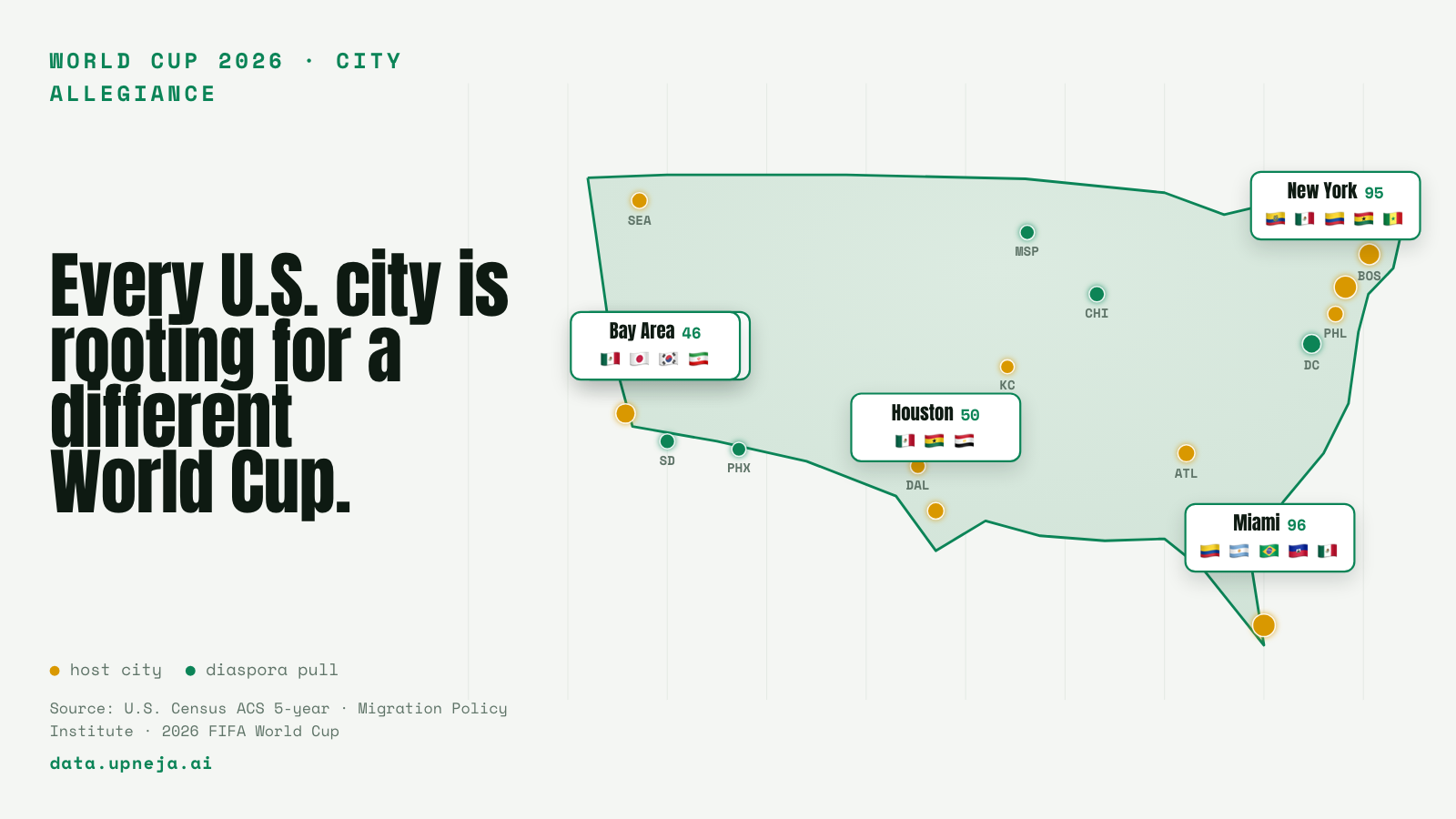
America’s World Cup Allegiance Map

A
Ayush Upneja
@upneja · draft

The 2026 World Cup is going to be chaos in America. Not because of the USMNT. Because every major city is secretly hosting 5 other countries too. Miami is not watching the same tournament as Queens. LA is not watching the same tournament as Boston. So I’m mapping who each city will actually root for.

thread beats
  1. 1.This is not ‘who lives here.’ It is an allegiance signal: diaspora + language + search behavior + local soccer culture.
  2. 2.The 2026 World Cup is a home tournament for dozens of fanbases, not just the U.S.
  3. 3.Next: city cards so people can find their metro and argue with it.
sources
  1. ACS 5-year API: ancestry, place of birth, language
  2. Google Trends metro interest snapshots
  3. FIFA 2026 host cities / schedule
  4. public supporter-club and soccer-bar directories
CTA: Reply with your city and I’ll make the allegiance card.
open site
1600×900 export#2
NYC9288VOL
SF6196BEAR
DC7775CHOP
ATX8363BULL

Is your city bullish or bearish for dating?

source-backeddata.upneja.ai
#2Dating / RedKnotClubbuild first

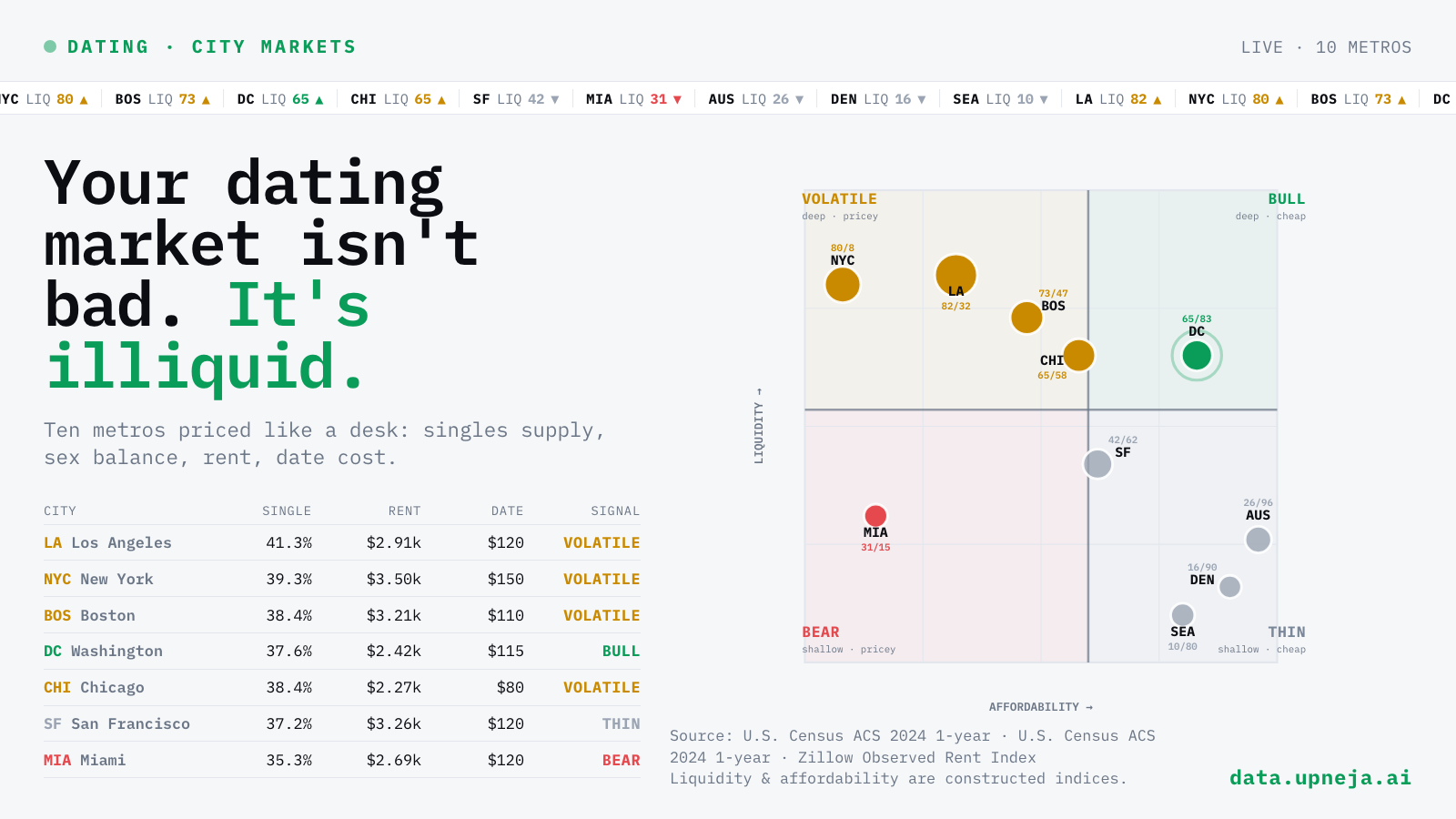
Dating Market Terminal

A
Ayush Upneja
@upneja · draft

Dating apps didn’t make every city equally bad. NYC bad is not SF bad. DC bad is not Austin bad. Miami bad is its own asset class. So I’m building a dating-market terminal for cities: singles, cost, churn, third places, and how often you can meet someone without making it a whole production.

thread beats
  1. 1.Liquidity = singles density and balanced age bands. Affordability = rent pressure + wages + cost of a date.
  2. 2.Offline surface area = third places, recurring events, parks, bars, cafes, libraries, gyms, and walkability.
  3. 3.The point is not to rank humans. It is to show why meeting people feels easier in some cities than others.
sources
  1. ACS marital status / age / sex / education
  2. BLS OEWS metro median wages
  3. HUD / Zillow / Apartment List rent snapshots
  4. OpenStreetMap POIs via Overpass
  5. IRS/Census migration and mobility tables
CTA: If your city is broken, RedKnotClub is the experiment to fix the offline layer.
open site
remaining queue8 drafts
1600×900 export#3
hopepainBrunson

50 years of New York basketball pain

source-backeddata.upneja.ai
#3NBA / New Yorknext

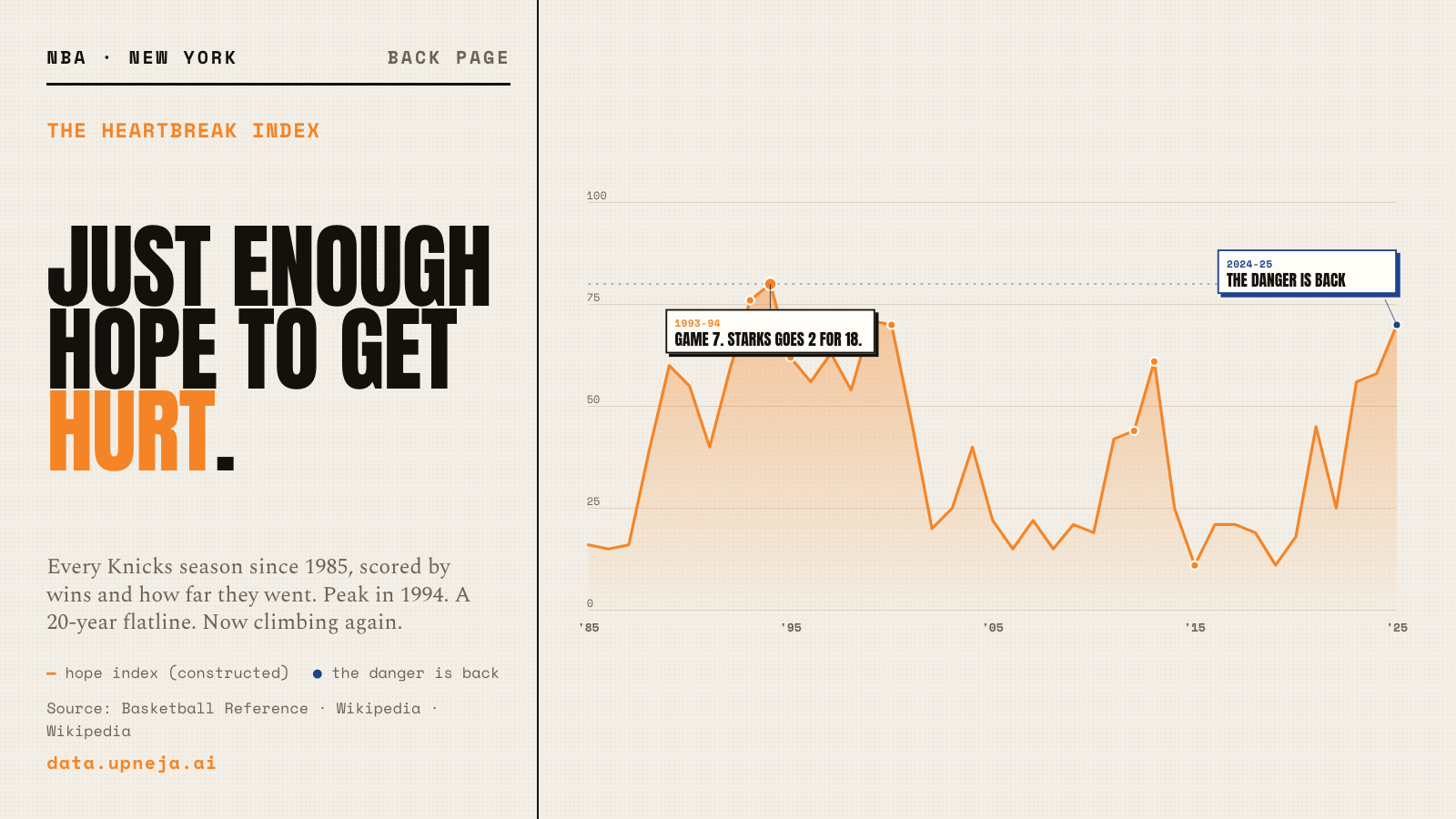
The Knicks Heartbreak Index

A
Ayush Upneja
@upneja · draft

Being a Knicks fan is not just losing. It’s being given exactly enough hope to behave irresponsibly. So I made a Knicks Heartbreak Index: expectations, regular-season dopamine, playoff cruelty, injury nonsense, star drama, and NY media delusion.

thread beats
  1. 1.A normal bad team is boring. A heartbreaking team first convinces you something beautiful is happening.
  2. 2.The index spikes when hope is high and the ending is uniquely cruel.
  3. 3.Brunson changed the slope. Which is exactly why the danger is back.
sources
  1. Basketball Reference Knicks seasons/playoffs
  2. SportsOddsHistory preseason NBA win totals
  3. transactions/injury context from public reporting
  4. Google Trends interest spikes
CTA: Knicks fans: which season deserves the highest pain multiplier?
open site
1600×900 export#4
time with friends

The friendship recession is real

source-backeddata.upneja.ai
#4Social life / RedKnotClubnext

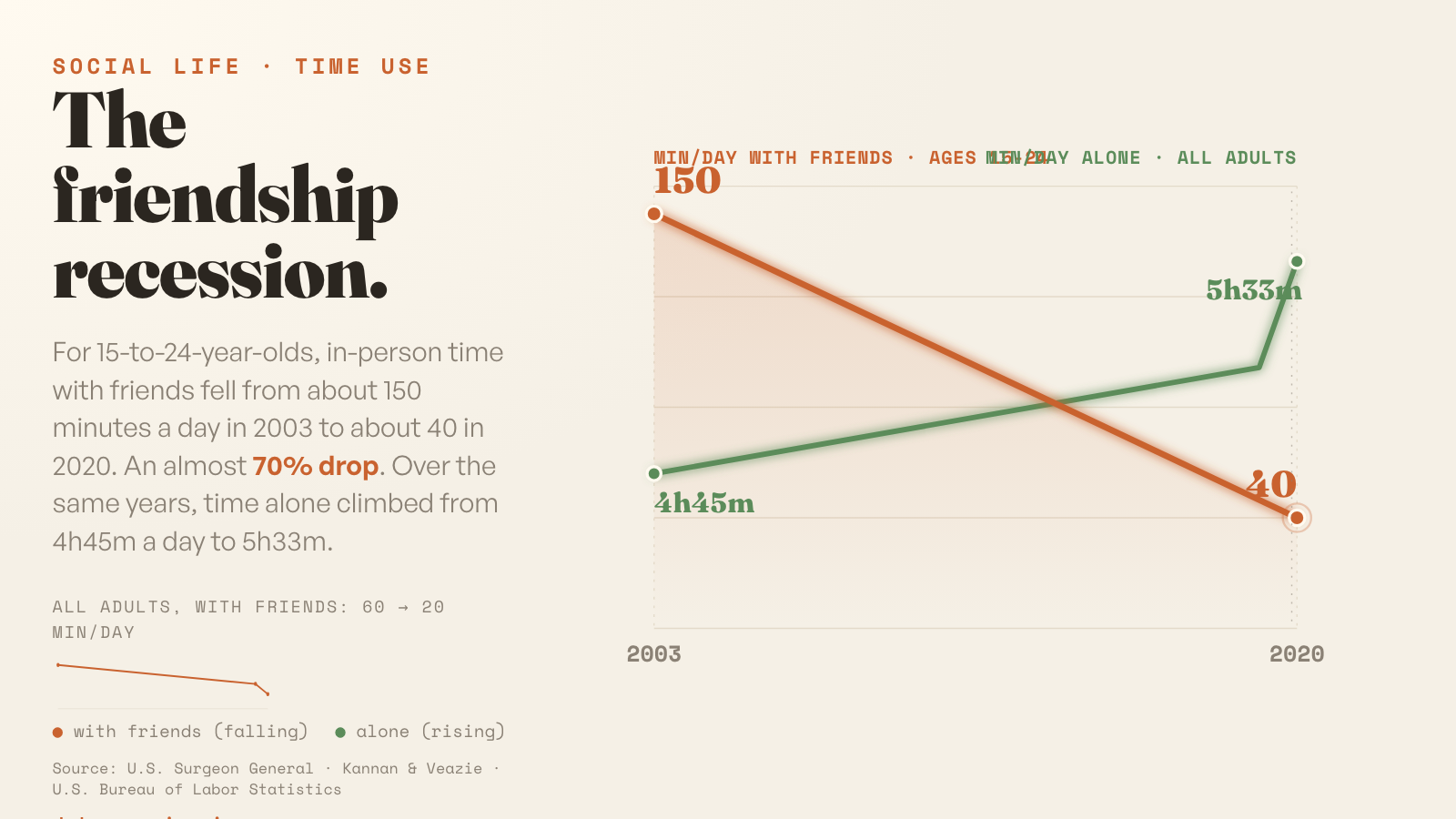
The Friendship Recession

A
Ayush Upneja
@upneja · draft

A lot of people think they personally got worse at making plans. Maybe. But also: Americans spend less time with friends, more time alone, and a lot of neighborhoods lost the easy places where casual friendship happens. That’s the friendship recession.

thread beats
  1. 1.This is not about blaming people for being lonely. It is about systems: work, cost, commute, phones, housing, and fewer recurring places to belong.
  2. 2.The most important map is not where people live. It is where they can repeatedly meet without planning a $100 night.
  3. 3.The solution probably looks less like another app and more like recurring offline infrastructure.
sources
  1. BLS American Time Use Survey socializing data
  2. General Social Survey social-life variables
  3. U.S. Surgeon General social connection advisory
  4. OpenStreetMap third-place density
CTA: This is the graph I want RedKnotClub to reverse.
open site
1600×900 export#5
FIRST DATE
drinks$48
food$42
transit$18
tip$16
TOTAL$124

The $100 first date is normal now

source-backeddata.upneja.ai
#5Dating / cost of livingnext

The Cost of a First Date Index

A
Ayush Upneja
@upneja · draft

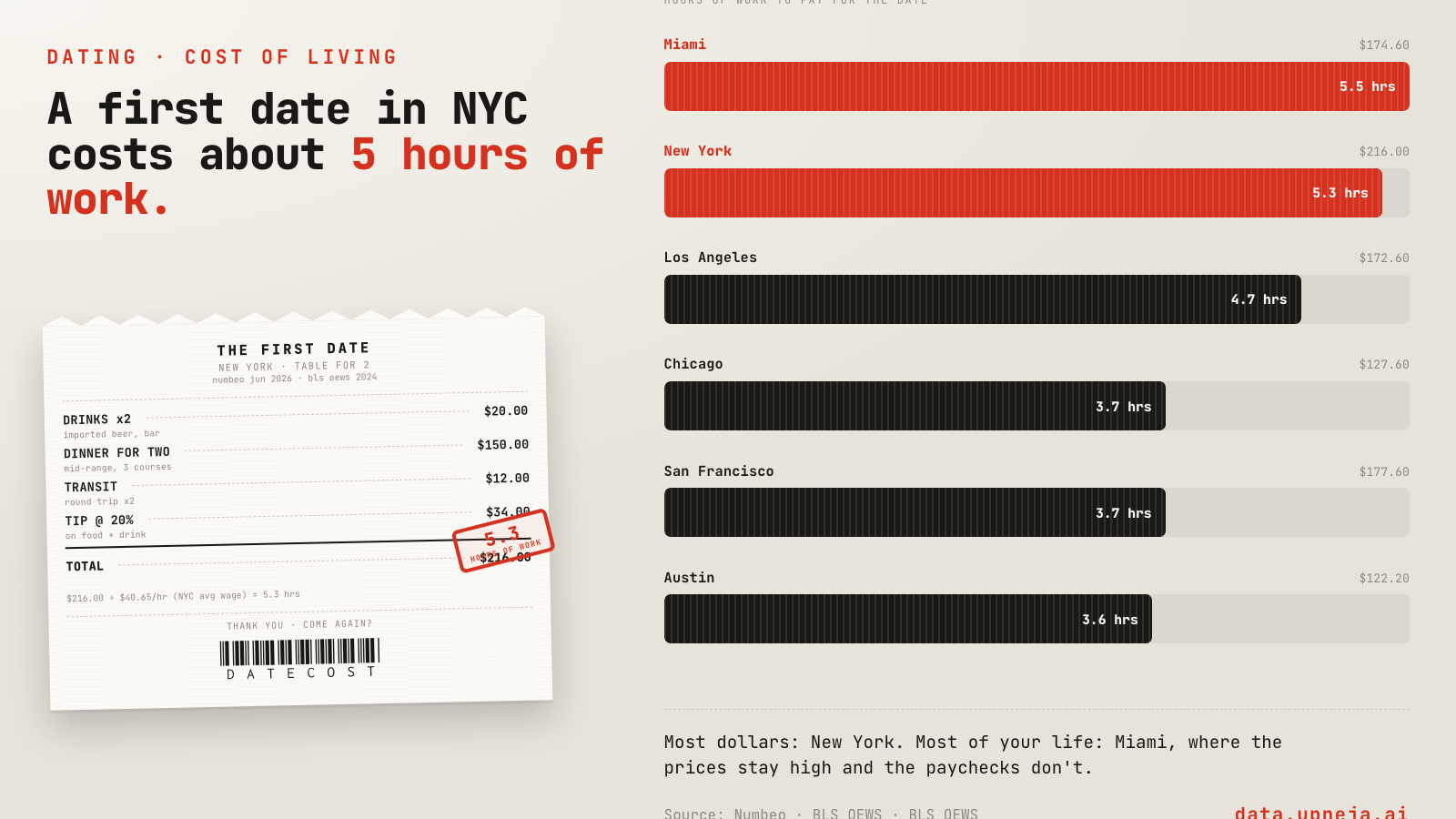
A first date used to be a low-stakes way to see if there was anything there. Now in some cities it’s basically a small invoice with eye contact. I’m building a First Date Index: coffee, drinks, dinner, transit, tip — and how many hours of work it costs.

thread beats
  1. 1.The most honest unit is not dollars. It is hours of median-wage work.
  2. 2.A city can have plenty of singles and still be a bad dating market if every attempt to meet has a high cover charge.
  3. 3.Next version: pick your city and date type, then compare against rent and wages.
sources
  1. Numbeo city price snapshots
  2. BLS CPI: food away from home, alcohol, admissions
  3. BLS OEWS metro median hourly wage
  4. MIT Living Wage Calculator
  5. transit agency fare pages / NTD
CTA: Reply with the city/date basket I should price first.
open site
1600×900 export#6
age 21age 24age 27age 30

At the same age, who was ahead?

source-backeddata.upneja.ai
#6Soccer / GOAT debatebacklog

The Soccer Aging Curve Race

A
Ayush Upneja
@upneja · draft

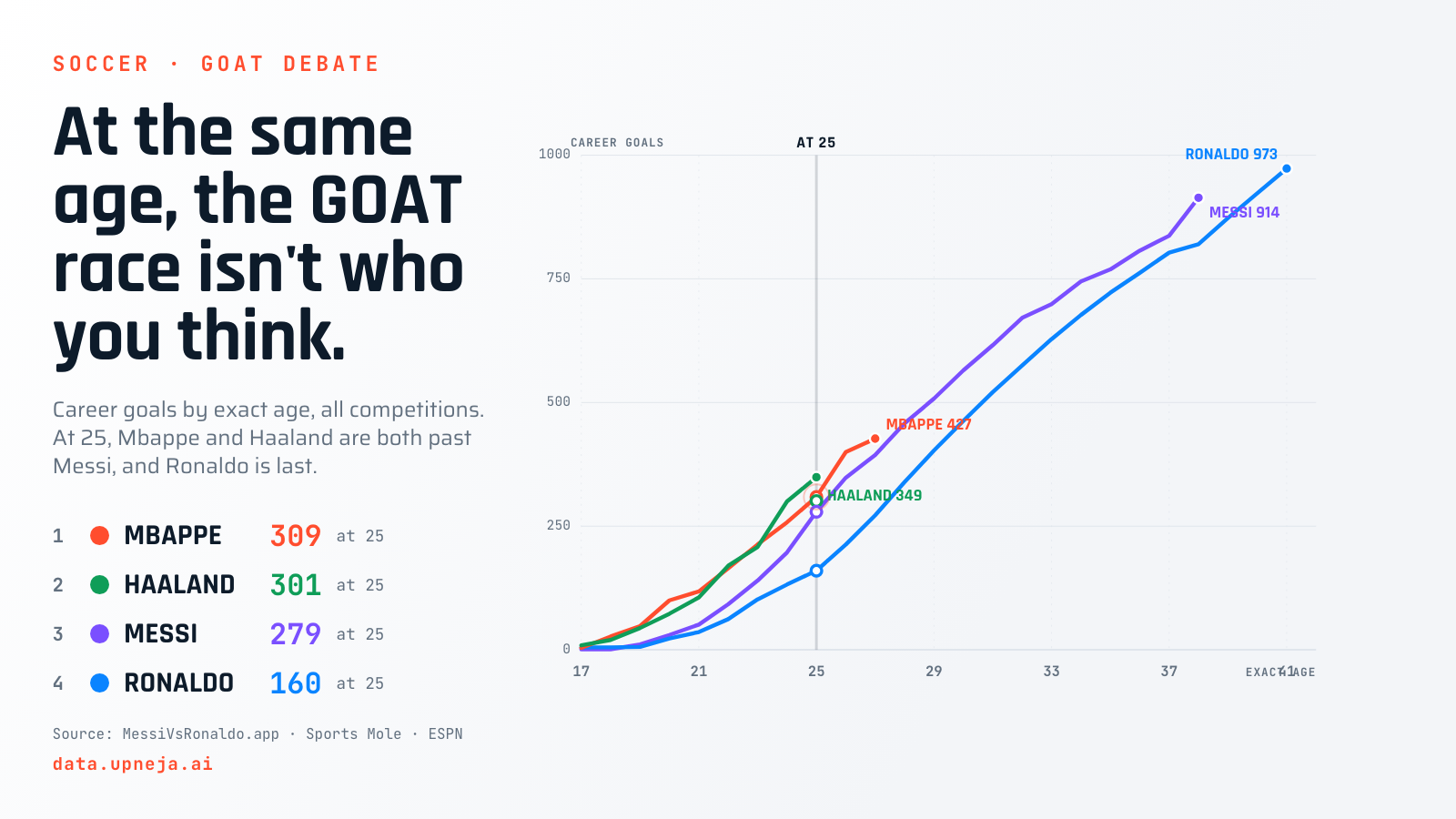
Messi/Ronaldo/Mbappé/Haaland arguments are usually fake because everyone is a different age. The better version: freeze them at the same birthday and ask who was actually ahead. That’s the chart. Age curves, not calendar-year totals.

thread beats
  1. 1.Calendar-year comparisons reward being older. Age-normalized curves show pace.
  2. 2.The best version has toggles: goals, assists, Champions League, international tournaments, trophies, minutes.
  3. 3.The discourse will be unbearable, which means the chart is working.
sources
  1. FBref player profiles
  2. Statbunker player/competition season tables
  3. Transfermarkt club all-competition validation
  4. FIFA / UEFA / CONMEBOL tournament records
CTA: Which metric should lead: goals, G+A, or tournament output?
open site
1600×900 export#7
third places / 10k residents

Your city didn’t get lonelier by accident

source-backeddata.upneja.ai
#7Cities / policybacklog

The Third Place Extinction Map

A
Ayush Upneja
@upneja · draft

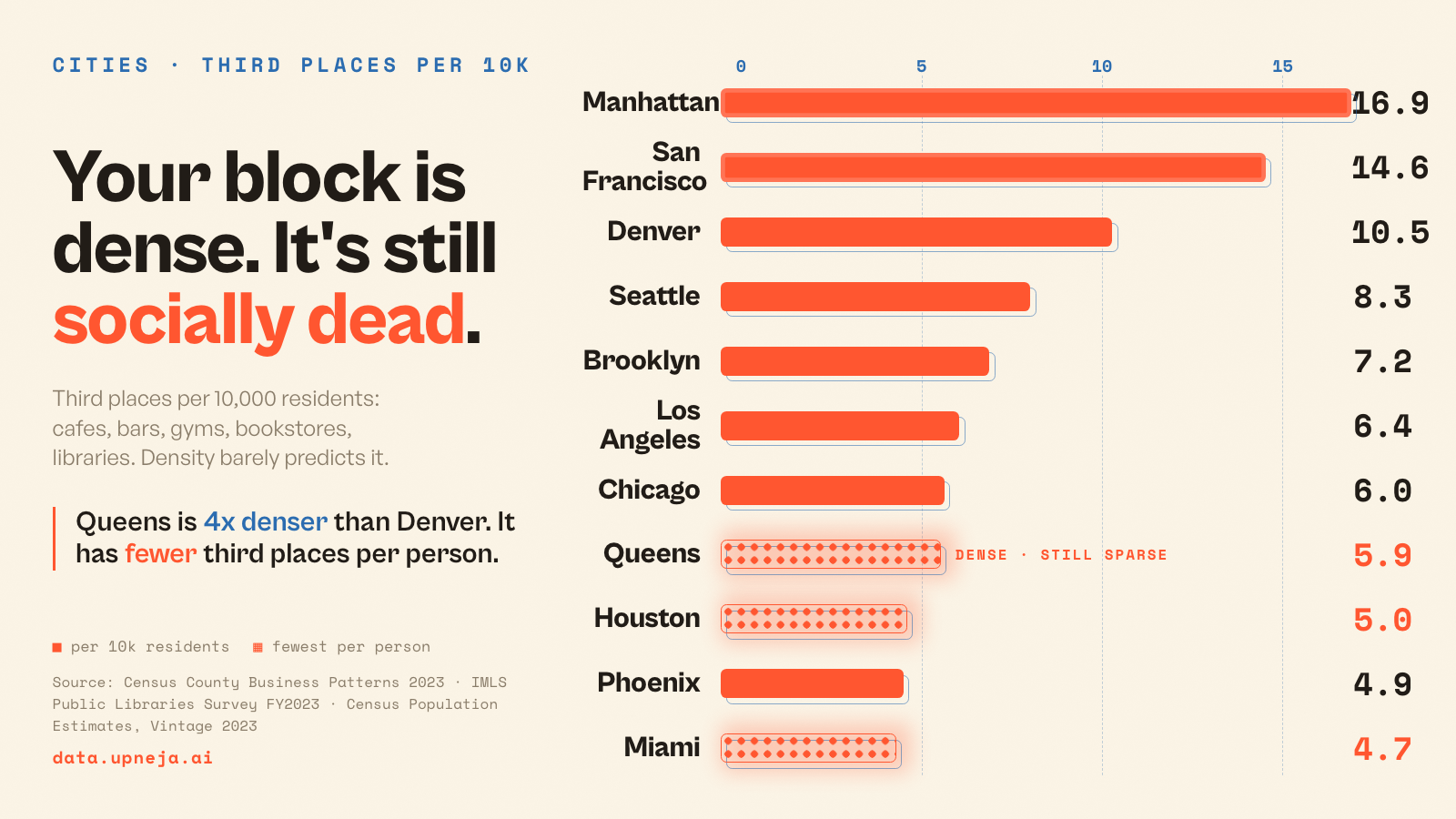
Some neighborhoods are dense but still feel socially dead. Why? Because density is not the same as places to become a regular. I’m mapping third places — libraries, parks, cafes, bars, gyms, churches, bookstores, plazas — per 10,000 residents.

thread beats
  1. 1.Third places are not just cafes. They are libraries, parks, plazas, churches, bars, gyms, bookstores, community centers, and recurring events.
  2. 2.The key visual: where people live vs where they can repeatedly gather within a short walk.
  3. 3.A neighborhood can be dense and still socially empty if every gathering place is expensive, temporary, or far away.
sources
  1. Census County Business Patterns NAICS establishments
  2. CBP API by county/NAICS
  3. IMLS Public Libraries Survey
  4. ACS population denominators
  5. OpenStreetMap POIs via Overpass
CTA: I want to make this for NYC first. Which neighborhood should be the test case?
open site
1600×900 export#8
health31%
defense14%
schools12%
interest11%
transit4%

You paid taxes. What did you buy?

source-backeddata.upneja.ai
#8Policy / cfindexbacklog

The Policy Receipt

A
Ayush Upneja
@upneja · draft

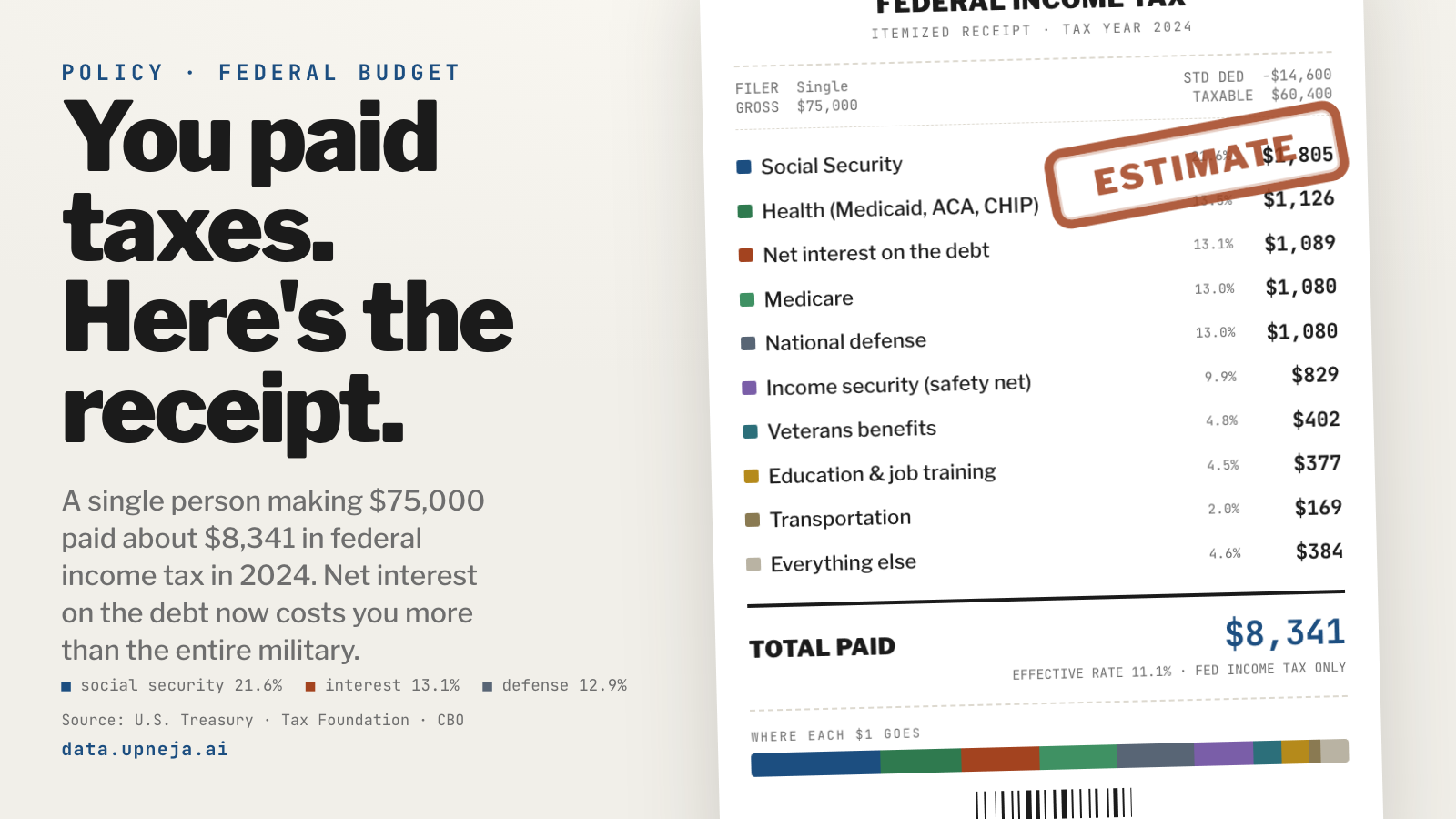
Most political arguments would get 30% less stupid if people could see the receipt. You paid taxes. What did you buy? I’m building a policy receipt: income + location → estimated federal/state/local spending, translated into normal human categories.

thread beats
  1. 1.The hard part is not the chart. It is being honest about estimates, tax incidence, and local/federal splits.
  2. 2.The best version lets people compare: defense, healthcare, schools, interest, transit, police, parks, housing, debt service.
  3. 3.This is what civic education should feel like: boring PDFs turned into something you can understand in 20 seconds.
sources
  1. OMB federal budget tables
  2. CBO budget/economic data
  3. USAspending
  4. state and city budgets
  5. IRS SOI tax statistics
CTA: This should probably become a cfindex.org tool.
open site
1600×900 export#9

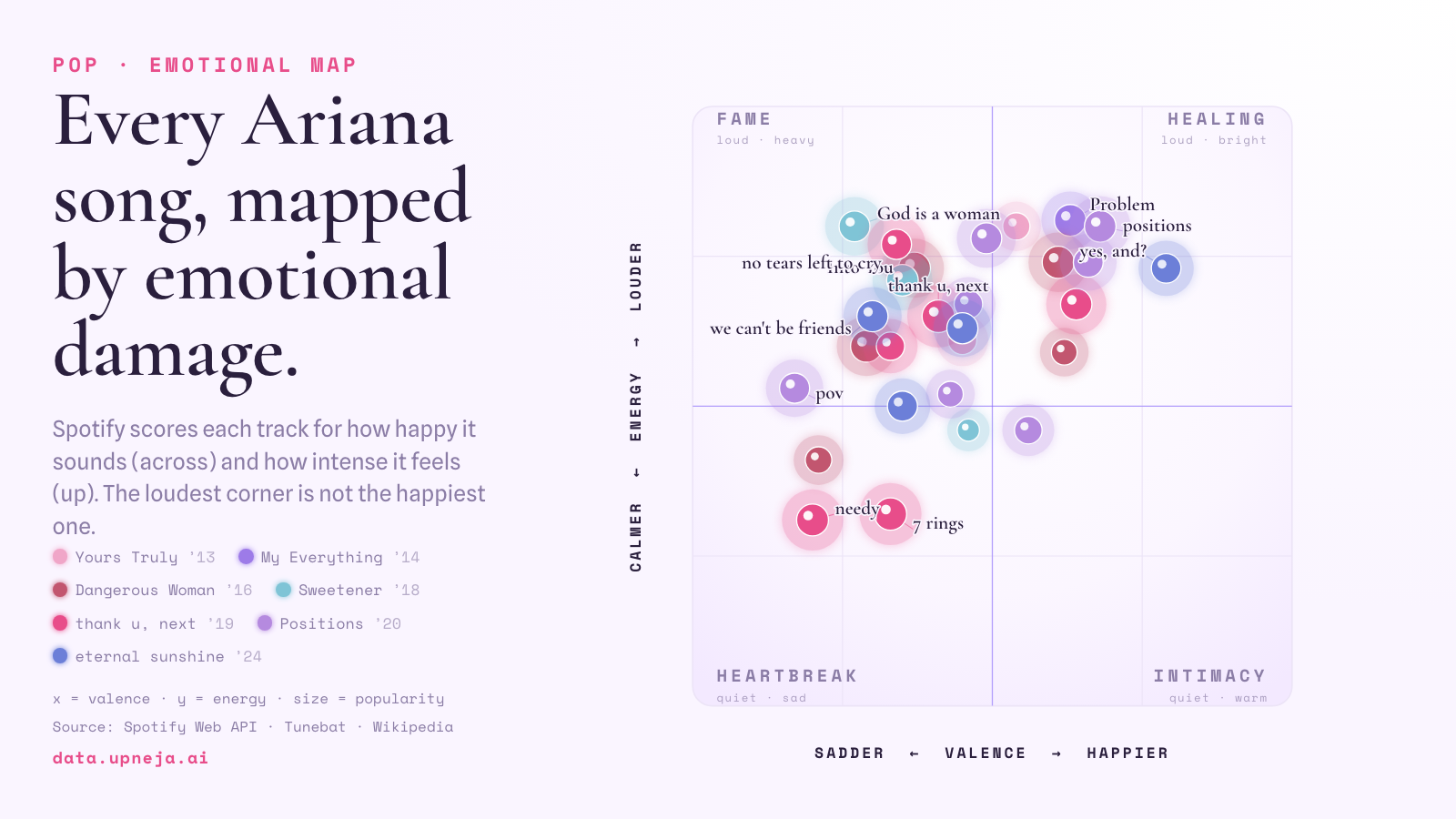
Every Ariana song, mapped by emotional damage

source-backeddata.upneja.ai
#9Pop culture / dating quizbacklog

The Ariana Grande Emotional Universe

A
Ayush Upneja
@upneja · draft

Ariana albums are basically emotional weather systems. Some songs are heartbreak. Some are healing. Some are fame brain. Some are ‘I’m fine’ in a way that suggests nobody is fine. So I’m mapping the songs as galaxies.

thread beats
  1. 1.No full lyrics needed. The map can use metadata, album eras, chart history, and human-coded themes.
  2. 2.The fun part is the quiz layer: which Ariana era is your dating life in?
  3. 3.This template works for Taylor, SZA, Olivia, Drake, The Weeknd, and basically every fandom with era discourse.
sources
  1. Spotify Web API
  2. Billboard chart references
  3. official album release dates
  4. public fan wiki cross-checks
  5. human-coded themes; no full lyrics
CTA: Ariana fans: which song is the most emotionally misclassified?
open site
1600×900 export#10
desiredactual

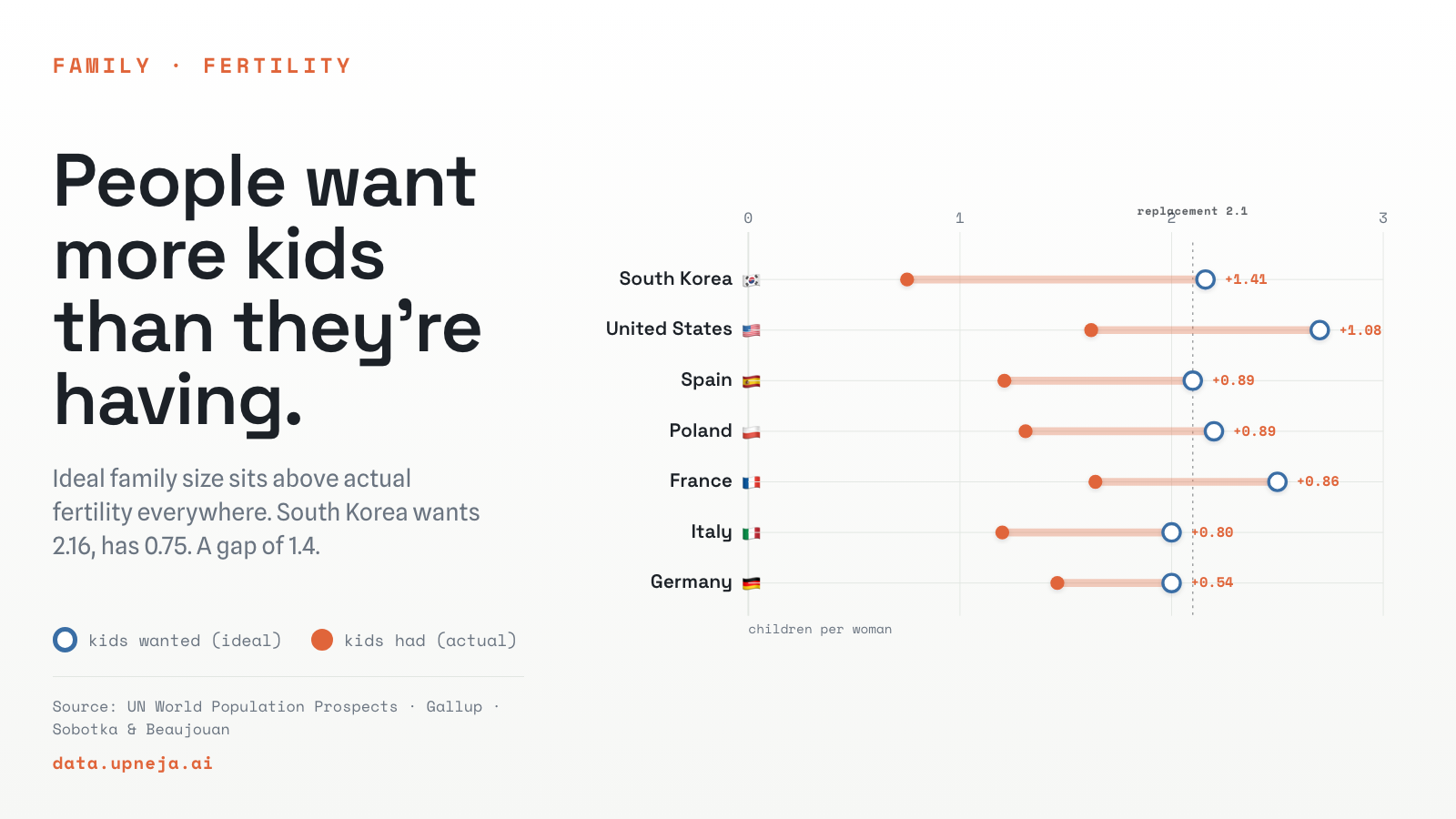
People want kids. Life got too expensive.

source-backeddata.upneja.ai
#10Family policy / cfindexbacklog

The Baby Gap

A
Ayush Upneja
@upneja · draft

The fertility debate usually gets weird fast. But one question is pretty concrete: do people have fewer kids than they say they want because the surrounding life got too expensive? I’m mapping desired children vs actual children, then layering in housing, childcare, and wages.

thread beats
  1. 1.This should not be framed as coercive pro-natalism. It is about whether people can have the families they say they want.
  2. 2.The key chart is desired family size vs actual fertility, with affordability pressure sitting in the gap.
  3. 3.This is one of the cleanest anchors for cfindex.org.
sources
  1. OECD family/fertility indicators
  2. UN World Population Prospects
  3. World Values Survey
  4. CDC/NCHS natality
  5. ACS housing/income
  6. childcare cost datasets
CTA: The policy question: what would make the desired and actual lines converge?
open site